


Research Areas
Development of Bioremediation Technology
MSWM is key factor in socioeconomic development. India alone generate more than 1,00,000 metric ton of solid waste every day. Around 10,200 MT per day municipal solid waste is generated only in the state of Gujarat, out of which, Ahmedabad city produces about 3500 Metric Tons (MT) of solid waste per day. The dumpsite spread over 84 acres, approximately 75 feet and weighing around 69 lack metric tons. Out of 4700 metric tons of solid waste dumped in this site every day 1700 metric tons come from the door-to-door collections from household, 500 tons from medical waste and 2500 ton from construction waste (AMC report 2012). Landfill burning of waste creates a smoke which may contain acids, nitrogen oxide, Sulphur oxides, aldehydes, polycyclic hydrocarbons, dioxins and other organic and volatized heavy metals. All of these are extremely hazardous as it may create respiratory issues like lung diseases, premature child delivery and also it emits methane which have serious health effects on peoples from surrounding areas. Thus along with spread of carcinogens in surrounding air MSW dumpsites also pollute surrounding groundwater. Major portion of MSW biomass comprises (Approximately 40%) with organic biomass which contains the recalcitrant hemicellulose, lignin and pectin. Plastic is estimated approximately 20-30% of the total volume of municipal solid waste. As plastic is recalcitrant it resides in dumping site semi permanently. Presence of plastic also shortens life of landfill site and cause serious environmental dangers. Not a single technology including physiochemical or biological is adequate for efficient treatment of recalcitrant lignocellulosic and plastic waste degradation of MSW dumpsite. Therefore, novel biocatalyst development is prerequisite to create Zero waste zone.
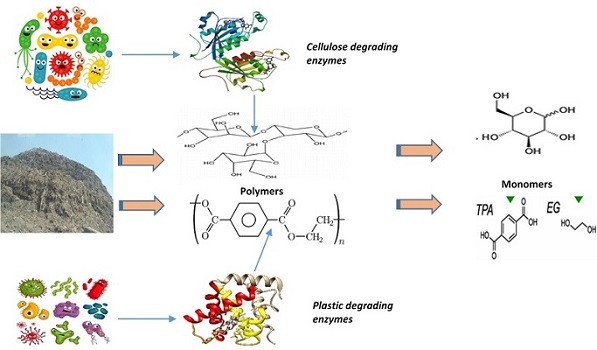
Cellulose is the most abundant, homogeneous and recalcitrant polysaccharide in lignocellulosic portion of MSW. Cellulose and hemicellulose are main degradable components of MSW but the presence of surrounding lignin polymer limits its biodegradability. Plastic is chemically, physically and biologically inert, and also it has long durability as it cannot degrade quickly due to complex blends of polymerized long chain backbones and addition of additives in order to increase the strength of plastic. Physiochemical is preferred option for bioremediation but large initial investment, higher operation cost, little or no energy production limits its application. Microbial technologies are gaining more importance recently due to its widely application in environmental remediation. Some genera such as Cellulomonas, Pseudomonas, Bacillus, and Micrococcus are important cellulose degraders while bacteria like Ideonella sakaiensis are reported for plastic degradation, but the requirement of its specific environment and media for cultivation limits its widespread applications for MSWM on field scale. Microbes are very difficult to degrade synthetic chemical bonds within the plastic. There is no safe way for disposal of plastic also it remains persistent in food chain. Lack of effective recycling policy of plastic is another challenge. Changing waste composition and some techno environmental issues are major challenges in MSW management.
Enzyme based technology through metagenomic approach involves the isolation of DNA directly from the environmental samples. It also gives in detail insights into genomic pool of microbes directly present in particular environmental source. Mining of these metagenomes allows us understanding microbial catabolic diversity with discovery of novel genes/ enzymes which are efficient for MSW waste degradation. The different enzymes which are responsible for waste degradation can be mined from metagenomes study and further bioinformatics analysis to identify cluster of genes responsible for targeting enzyme. Cloning and expression of such metagenomic screened targets will result into novel bio catalytic applications for Municipal solid waste treatment for recalcitrant compounds mainly lignocellulose and plastic waste.
Currently the team is involved in-
- Metagenomics understanding of MSW dumpsite soil to understand the microbial community associated with degradation of organic constituents of MSW (Cellulosic and Plastic waste)
- Mining of enzymes like esterase’s, proteases, carboxylesterases, laccaases, cutinase, hydroxylases and peroxidases from big metagenomics datasets for enzyme bioengineering for effective bioremediation of Plastic and cellulosic waste constituents